Horário de visitaFechado
|Quinta-feira, Agosto 20, 2026Állatkerti körút 9-11, 1146 Budapeste, Hungria (Parque da Cidade / Városliget)
Voltar para history
architecture
Széchenyi Baths History – Architecture & Thermal Heritage
Explore the architectural and cultural history behind Budapest’s Széchenyi Baths, from spring discovery to modern era.
11/20/2025
15 min read
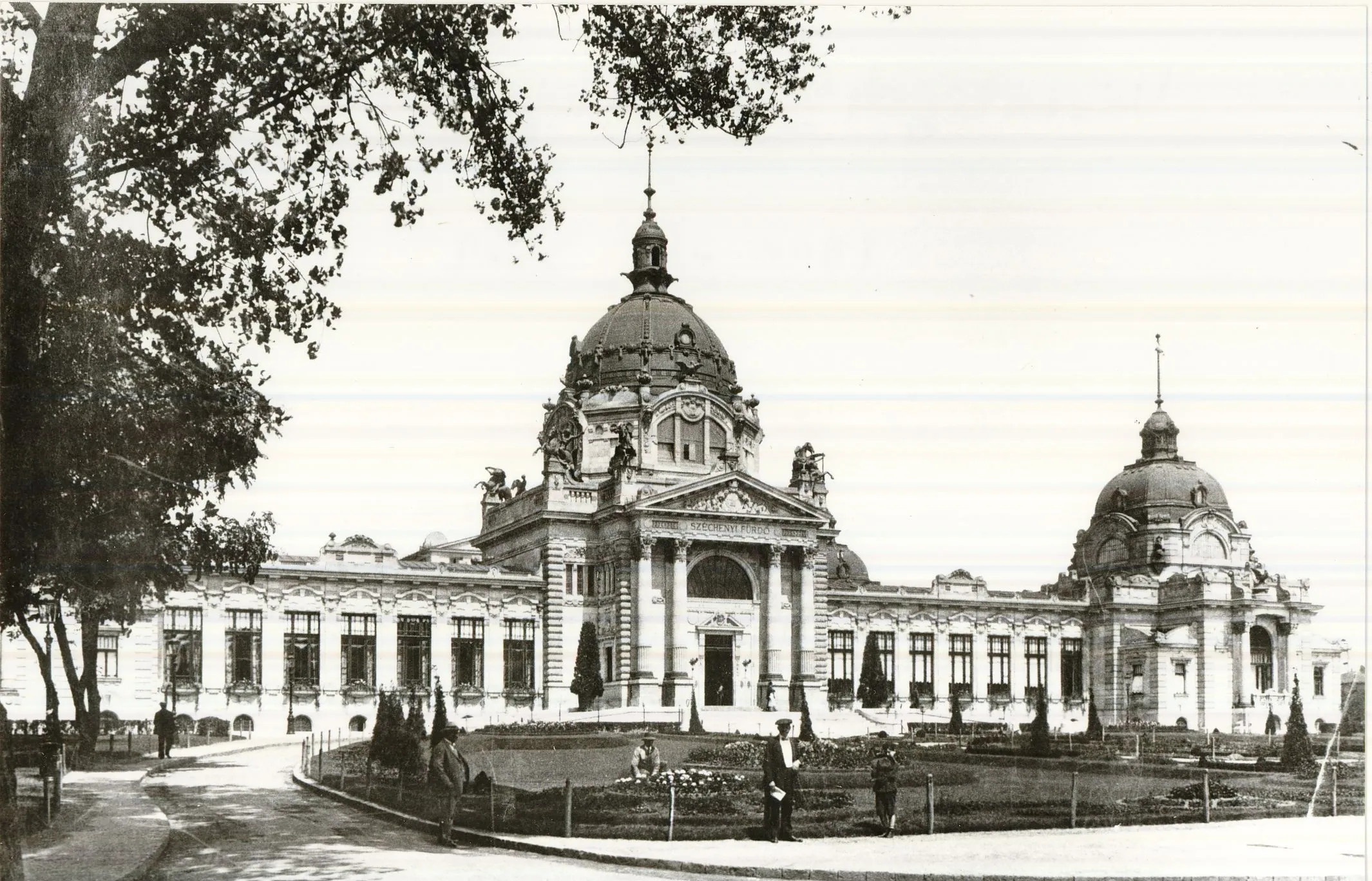
Timeline Highlights
| Year | Milestone | Significance |
|---|---|---|
| 1879–1900 | Deep drilling explores thermal source | Validates viability for large public complex |
| 1913 | Official opening | Neo-Baroque aesthetic celebrates civic pride |
| Interwar Period | Popularity growth, social gathering | Thermal bathing entwines with leisure culture |
| Socialist Era | Maintenance + utilitarian framing | Health + public welfare emphasis |
| Post-1990s | Renovations + tourism scaling | International branding elevates global profile |
Architectural Vocabulary
- Neo-Baroque curves & ornament: Evokes grandeur; statues & balustrades frame steam visuals.
- Symmetrical courtyard axis: Facilitates movement loops between pools.
- Yellow facade coloration: Warm tone contrasts with blue water and winter steam.
Why Neo-Baroque?
An aesthetic aligning with early 20th-century Budapest’s aspiration—marrying classical luxury with wellness democratization.
Thermal Source & Water Management
- Deep artesian wells tap mineral-rich water.
- Filtration + temperature balancing ensure user safety (verify on-site data for precise mineral composition—published analyses update periodically).
Cultural Role
- Social mixing zone: Locals, wellness seekers, photographers.
- Symbol of Hungary’s balneological tradition (alongside Gellért & Rudas).
Preservation & Modernization Tensions
| Aspect | Preservation Focus | Modern Adaptation |
|---|---|---|
| Facades & statues | Structural restoration | Lighting for night ambience |
| Water systems | Safety + clarity | Energy efficiency retrofits |
| User flow | Historic spatial logic | Digital ticketing overlays |
Responsible Visiting
- Respect quiet zones; not all areas are photo sets.
- Avoid touching fragile decorative elements.
- Consider early or shoulder-season visits to reduce pressure on infrastructure.
Bottom Line
Széchenyi is living heritage: ornamental architecture layered onto practical hydro engineering—still evolving while preserving Budapest’s thermal identity.
Sobre o autor

Baths Heritage Researcher
Escrevi isto para mergulhares de forma mais inteligente – melhor timing, bilhete certo e escolhas sem stress.
Tags
Szechenyi Baths
history
architecture
Neo-Baroque
Budapest
Comments (0)
Leave a Comment
Loading comments...